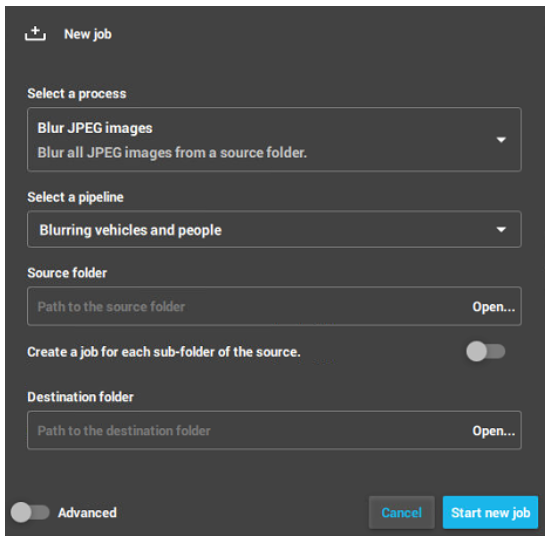
 1. *Select a process:*\
\- Blur JPEG Images\
\- Blur PGR Images
2. *Select a pipeline:*\
\- Blurring vehicles and people\
\- Blurring license plates and faces.\
This setting is only used for blurring.
3. *Source folder:*\
Define the path of the parent directory where the recordings are stored.
4. *Create a job for each sub-folder of the source:*\
Choose to create a separate batch job for each descendant sub-folder of the source location.
5. *Destination folder:*\
Define the path to the location where the new data will be written to.
6. *Start new job:*\
Press on the blue ‘start new job’ button to add the batch job to the queue.
6. Monitor the status of the batch job.\
\
If there are no pending jobs currently being processed or in the queue, then the new job will automatically start processing.\
By selecting a batch job, you can view additional information about the processing.\
If you are unsure if the batch job is being processed, you may open the Graph Builder and verify if the pipeline is running and processing data.\
When the processing is done the job will be marked as completed.
7. Check the output of the batch job.\
Verify that the process has correctly processed the data by checking the destination folder.\
Verify that vehicles and/or persons are now blurred.
1. *Select a process:*\
\- Blur JPEG Images\
\- Blur PGR Images
2. *Select a pipeline:*\
\- Blurring vehicles and people\
\- Blurring license plates and faces.\
This setting is only used for blurring.
3. *Source folder:*\
Define the path of the parent directory where the recordings are stored.
4. *Create a job for each sub-folder of the source:*\
Choose to create a separate batch job for each descendant sub-folder of the source location.
5. *Destination folder:*\
Define the path to the location where the new data will be written to.
6. *Start new job:*\
Press on the blue ‘start new job’ button to add the batch job to the queue.
6. Monitor the status of the batch job.\
\
If there are no pending jobs currently being processed or in the queue, then the new job will automatically start processing.\
By selecting a batch job, you can view additional information about the processing.\
If you are unsure if the batch job is being processed, you may open the Graph Builder and verify if the pipeline is running and processing data.\
When the processing is done the job will be marked as completed.
7. Check the output of the batch job.\
Verify that the process has correctly processed the data by checking the destination folder.\
Verify that vehicles and/or persons are now blurred.
| Contact Horus | Request help or a demo from the Horus team. | https://horus.nu/contact-us/ | ||
| Contact Celantur | Request help or a demo from the Celantur team. | https://www.celantur.com/contact/ |